

The Resilience of Alien Chess
There has been a famous within-Meta post called “The Resilience of Alien Chess”, and it was so successful that it got eventually re-published externally https://www.linkedin.com/pulse/resilience-alien-chess-mark-rabkin-6pcmc/. It was written by Mark Rabkin, who was head of Ads org when he first wrote it, and since then moved to be a key figure in Meta AR/VR org.
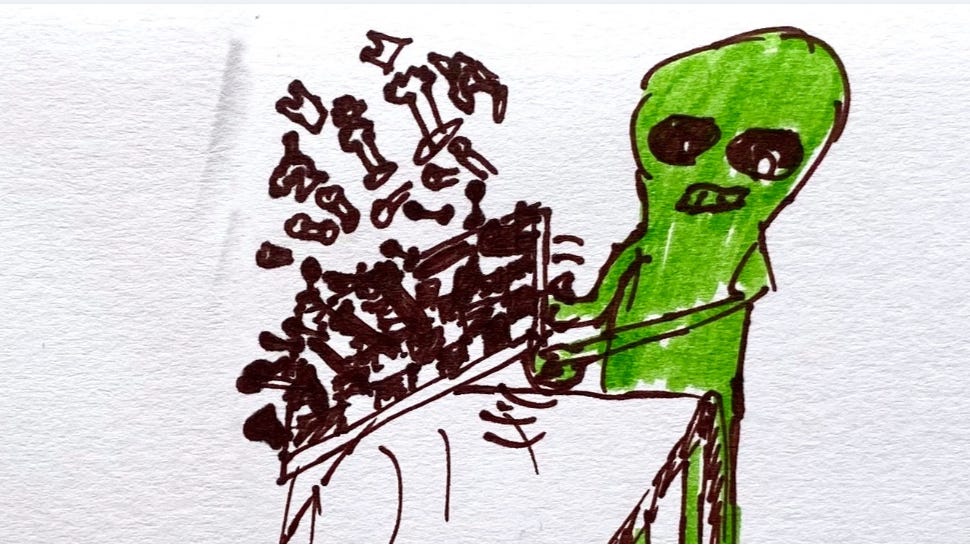
It explains very well how life in tech is like playing a chess game with aliens making random visits and changes to the board, and you need to accept that and adapt quickly. That’s how you remain successful.
This analogy was amazing, and I’ve seen how powerful this framing is. When someone is in work stress, if in a conversation another person mentions “alien chess”, quite often it is followed by a “you are right!”, and instant relief and peace of mind for the stressed person.
I’ve been very curious about this psychological effect, and it turns out this is well known.
It’s called “Need for Cognitive Closure”. It basically means:
For human psychology, uncertainty brings anxiety
Therefore, an explanation, any explanation, provides certainty, and addresses anxiety
The key is, the explanation doesn’t need to be correct for this effect
In this specific situation,
Reorg just happened, or a key decision was just announced, or a layoff just leaked, team members sense uncertainty by the reorg or the decision or the layoff (either we are laid off, or not), and thus have anxiety
Then the mention of “alien” provides a sense of explanation - ah, it’s aliens making moves again - which in turn provides certainty and addresses anxiety
I’ve seen this dynamic many times.
But there is a problem.
Who are the “Aliens”?
It turns out, it was not “aliens” playing chess, but rather “execs” playing chess.
Key decisions, reorgs, layoffs, all these are “execs” playing chess. The people sitting on top of the org chart and their peers, they are playing this chess game.
Granted, there are certain changes beyond their control, like a market condition just changed, or a competitor just launched a better product, or COVID forced lockdown, etc. The execs take these beyond-their-control inputs, and add their own judgment and human dynamics, then they make decisions which feel like alien chess for the teams below.
To address this feeling of uncertainty, the execs offer public explanations of their judgment to the affected teams.
But it’s just that the publicly-offered explanation of their judgment is NEVER the same as the real judgement, and it certainly NEVER includes the human dynamics. There are many hidden unspoken factors into the decisions. Those hidden factors are totally known at the execs level, but unknown at the team level, thus a perfect opportunity to be categorized as “alien”.
I want to clarify, I’m not rejecting the notion of “alien chess” - in fact, I think it’s very powerful. I’m just suggesting to think about the missing hidden factors, and turn some of these unknown “alien” conditions into hypotheses around “execs” conditions. Experimenting with these hypotheses help you understand, or even predict, such decisions.
In short, it’s not aliens playing chess. It’s execs playing chess, and there are hidden factors beyond the publicly offered explanation.
Now I’m curious whether this “Execs Chess” notion will catch on . :)